
Terrazzo vs Marble: Which Is Better for Bathrooms? A Complete Material Comparison Guide

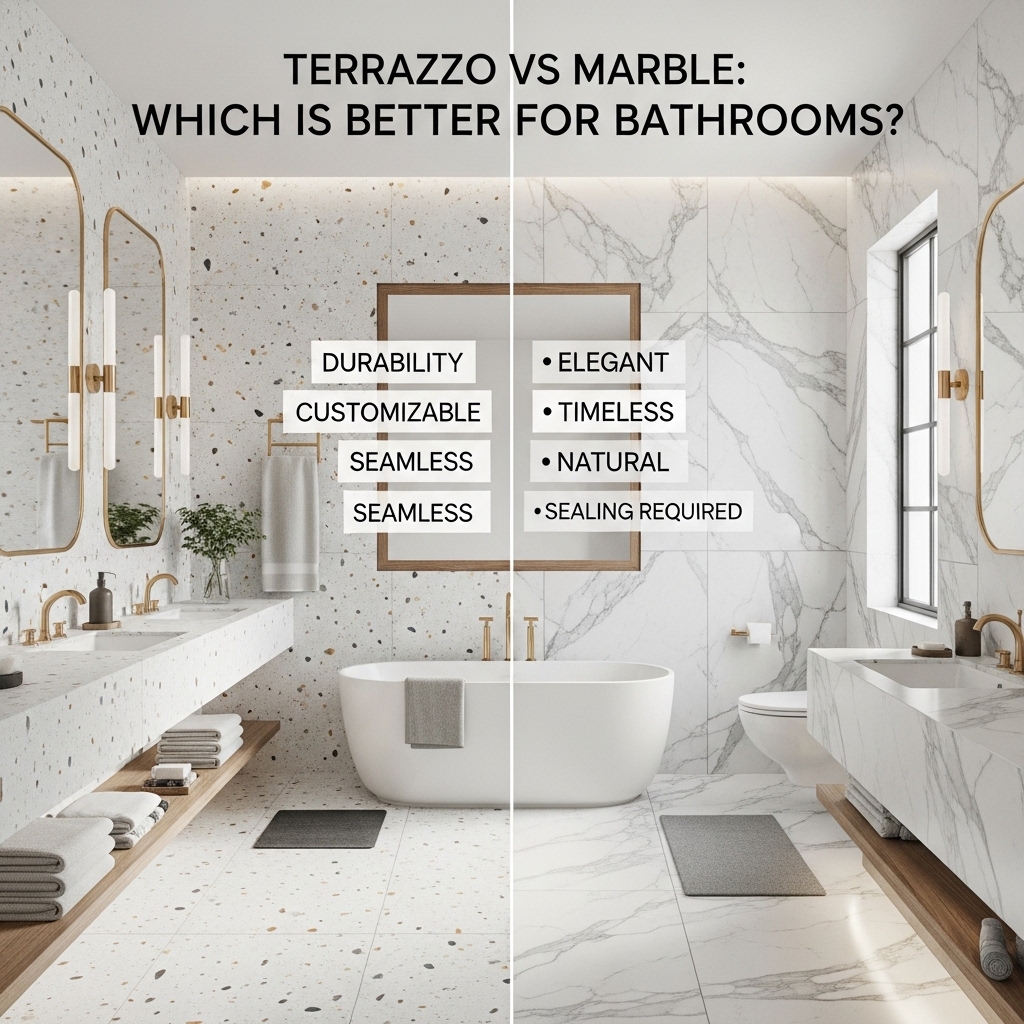
Choosing the right bathroom surface material is a long-term decision that affects durability, maintenance, and overall design impact. Terrazzo and marble are two popular options that offer very different benefits despite both being considered premium materials. Bathrooms require surfaces that can handle moisture, temperature changes, and daily wear. Understanding how terrazzo and marble perform in real bathroom conditions helps you make a smarter choice. This guide breaks down aesthetics, durability, cost, maintenance, and long-term value in detail.
Understanding Terrazzo as a Bathroom Material
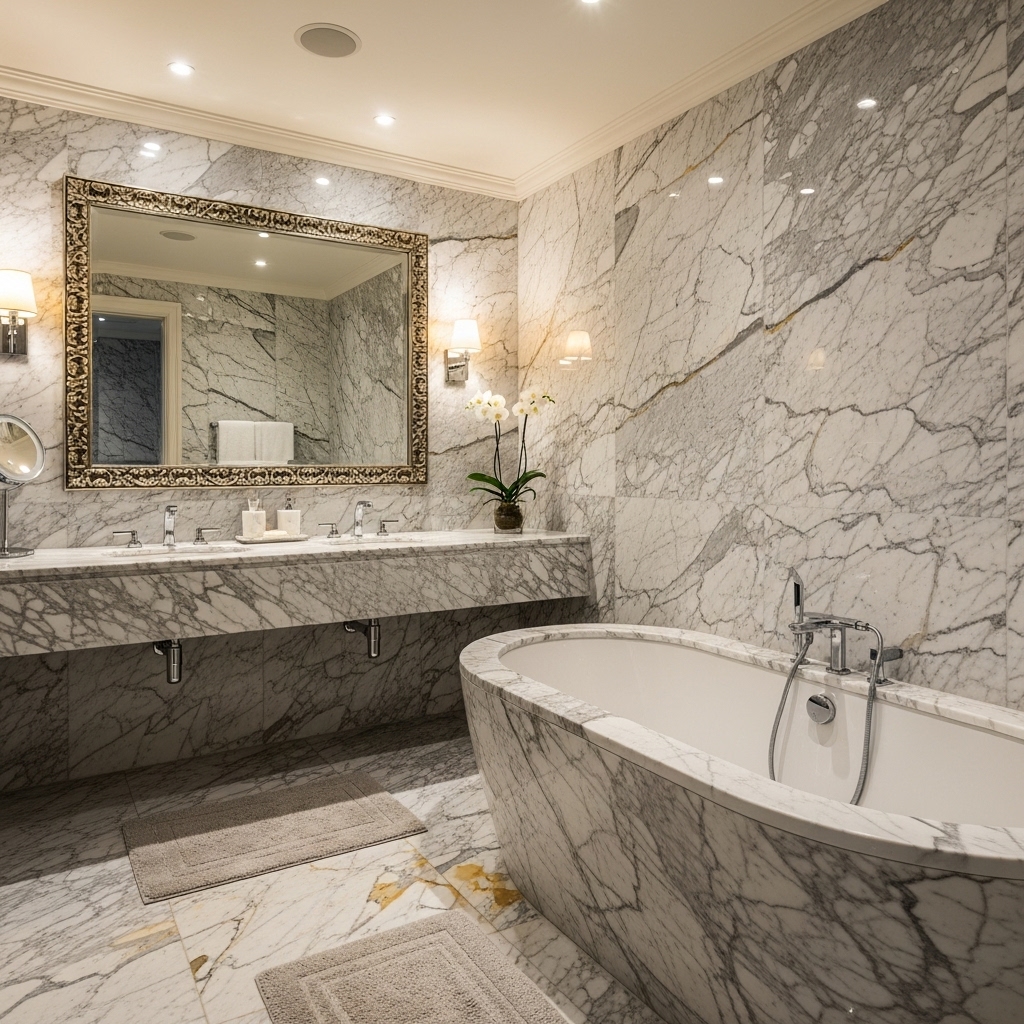
Terrazzo is a composite material made from marble, quartz, granite, or glass chips set in cement or resin. It is known for its durability and design flexibility. Modern terrazzo works exceptionally well in wet environments like bathrooms. Its seamless surface reduces moisture penetration when properly sealed. Terrazzo has become increasingly popular in contemporary and minimalist bathroom designs.
Understanding Marble as a Bathroom Material
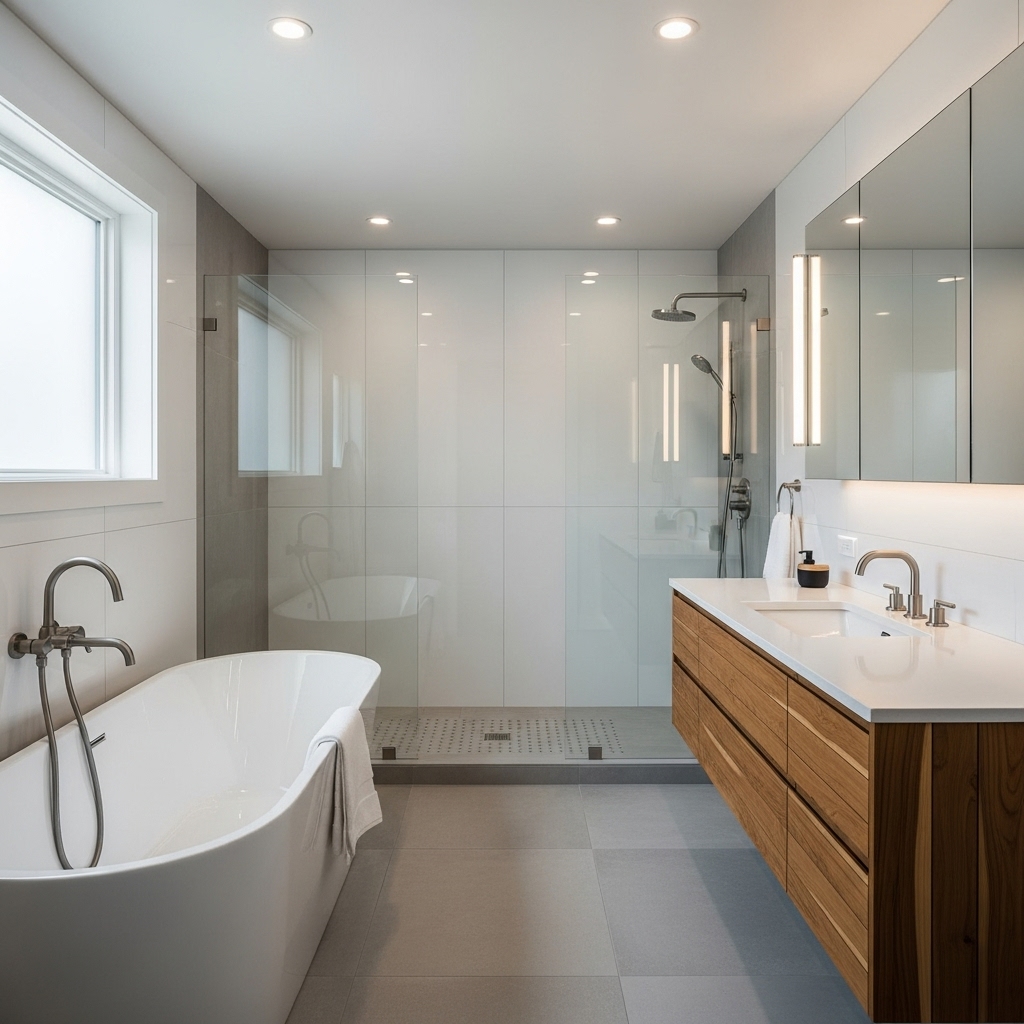
Marble is a natural stone prized for its elegance and timeless appeal. Each slab is unique, offering natural veining and color variation. Marble has been used in bathrooms for centuries. However, it is porous and requires regular sealing. While visually stunning, it demands careful maintenance in high-moisture spaces.
Visual Appeal and Design Flexibility
Both materials deliver high-end aesthetics, but in different ways.
- Terrazzo offers customizable colors, patterns, and aggregate sizes
- Marble delivers natural elegance and classic luxury
- Terrazzo suits modern, playful, and minimalist interiors
- Marble fits traditional, spa-style, and luxury bathrooms
- Design consistency is easier with terrazzo than marble
Durability and Longevity in Bathrooms
Durability is critical in a bathroom environment.
- Terrazzo is highly resistant to cracks and chips
- Marble can crack if not installed properly
- Terrazzo handles temperature changes well
- Marble is softer and more prone to surface wear
- Proper installation improves lifespan for both materials
Moisture Resistance and Water Exposure
Bathrooms demand materials that manage moisture effectively.
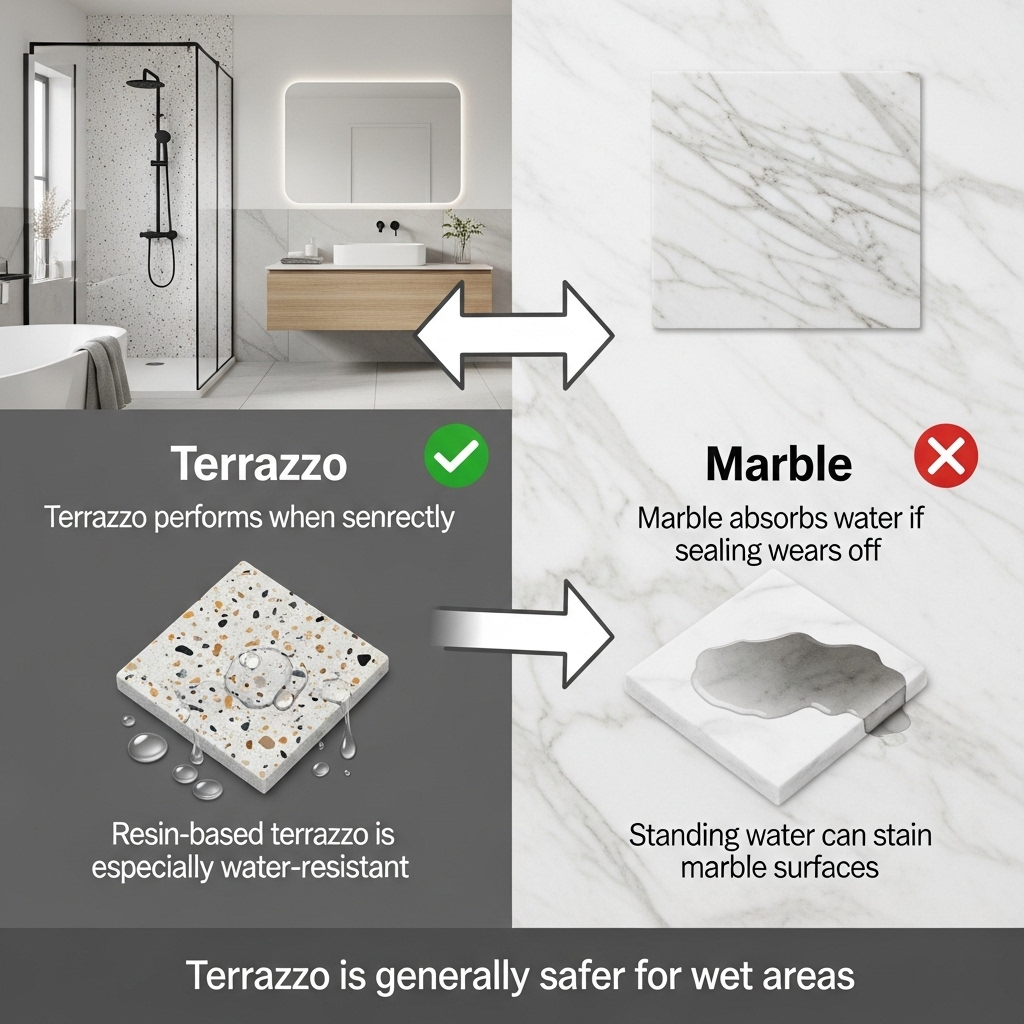
- Terrazzo performs well when sealed correctly
- Resin-based terrazzo is especially water-resistant
- Marble absorbs water if sealing wears off
- Standing water can stain marble surfaces
- Terrazzo is generally safer for wet areas
Maintenance and Cleaning Requirements
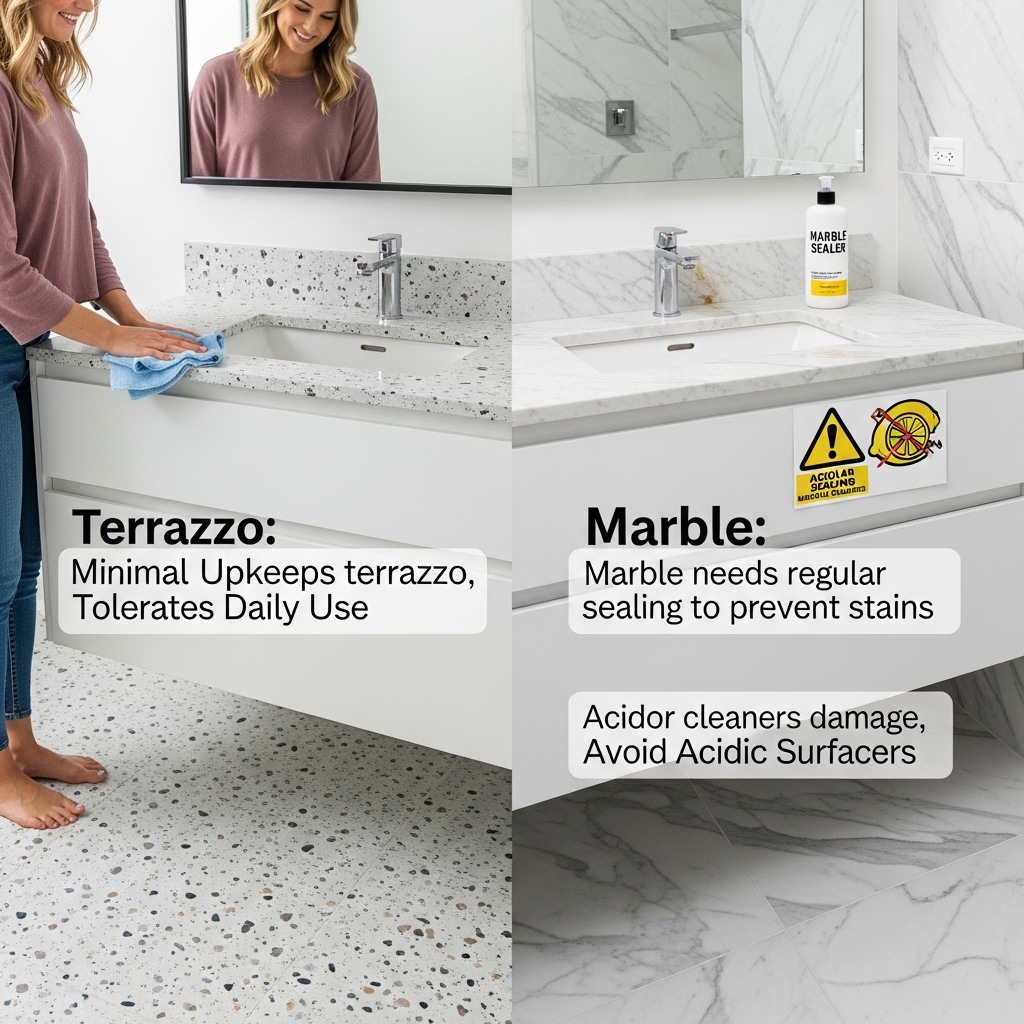
Maintenance expectations differ significantly.
- Terrazzo requires minimal upkeep
- Routine cleaning keeps terrazzo looking new
- Marble needs regular sealing to prevent stains
- Acidic cleaners damage marble surfaces
- Terrazzo tolerates daily bathroom use better
Cost Comparison: Terrazzo vs Marble
| Factor | Terrazzo | Marble |
|---|---|---|
| Material cost | Moderate to high | High |
| Installation | Professional recommended | Professional required |
| Maintenance cost | Low | High |
| Repair cost | Low to moderate | Moderate to high |
| Long-term value | Excellent | Variable |
Slip Resistance and Bathroom Safety
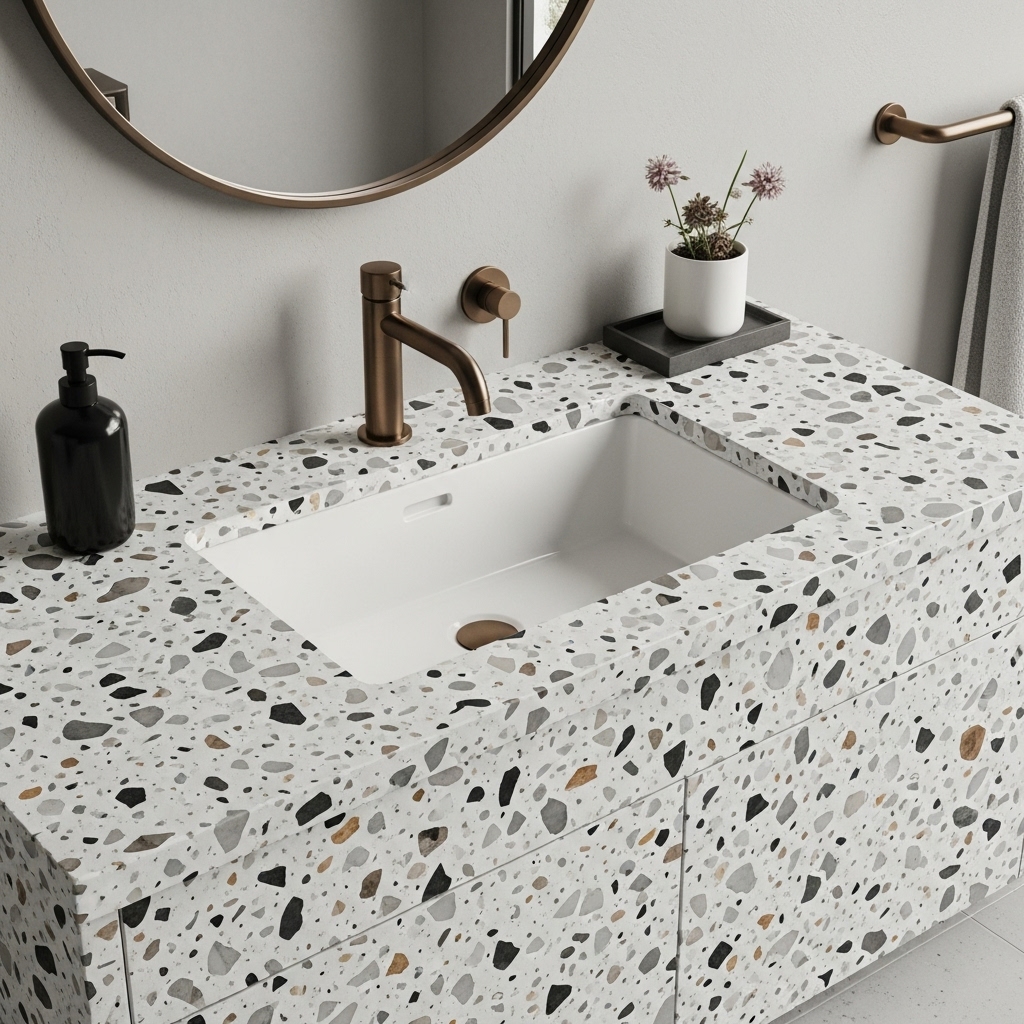
Slip resistance is essential for bathroom flooring.
- Terrazzo can be finished with anti-slip textures
- Polished marble can become slippery when wet
- Honed marble improves grip but dulls shine
- Terrazzo offers better traction options
- Safety upgrades are easier with terrazzo
Eco-Friendliness and Sustainability
Sustainable materials matter to many homeowners.
- Terrazzo often uses recycled aggregates
- Cement-based terrazzo has a long lifespan
- Marble quarrying impacts the environment
- Transportation increases marble’s carbon footprint
- Terrazzo is generally the greener option
Installation Complexity and Time
Installation impacts both cost and project timeline.
- Terrazzo installation requires skilled labor
- Precast terrazzo tiles speed up installation
- Marble installation is labor-intensive
- Marble slabs require precise cutting
- Both benefit from professional installers
Best Bathroom Applications for Each Material
Choosing the right application matters.
- Terrazzo works well for floors, walls, and shower areas
- Marble excels as vanity tops and accent walls
- Terrazzo suits high-traffic bathrooms
- Marble works best in low-use bathrooms
- Mixing both materials can enhance design
Pros and Cons at a Glance
Terrazzo Pros
- Highly durable
- Customizable appearance
- Low maintenance
- Moisture resistant
- Long lifespan
Terrazzo Cons
- Higher upfront cost than basic tile
- Professional installation required
Marble Pros
- Natural luxury appearance
- Unique veining
- Timeless appeal
Marble Cons
- High maintenance
- Porous surface
- Susceptible to staining
FAQs About Terrazzo and Marble Bathrooms
Is terrazzo good for bathroom floors?
Yes, terrazzo is highly durable, water-resistant when sealed, and suitable for bathroom floors.
Does marble work in showers?
Marble can be used in showers but requires frequent sealing and careful maintenance.
Which is more expensive, terrazzo or marble?
Marble typically has a higher long-term cost due to maintenance and sealing needs.
Can terrazzo crack over time?
Properly installed terrazzo is very resistant to cracking.
Which material lasts longer in bathrooms?
Terrazzo generally outperforms marble in longevity under bathroom conditions.
Conclusion
Terrazzo and marble both offer premium aesthetics, but their performance in bathrooms differs significantly. Terrazzo excels in durability, moisture resistance, and low maintenance, making it ideal for modern and high-traffic bathrooms. Marble delivers unmatched natural beauty but requires ongoing care and attention. Your final choice depends on lifestyle, budget, and design goals. Understanding these differences ensures your bathroom remains beautiful and functional for years to come.


